

Your first MMA class
No experience, no fitness test, no pressure to spar. Here is how to start.
Message us to book in- Home
- Beginners
To start MMA, find a gym with a beginners or fundamentals class, tell the coach it's your first time, and go regularly for a month before you judge it. You don't need experience, a certain fitness level or your own kit. At Northstar MMA, every beginner starts in MMA Fundamentals, which runs four times a week.
How to start MMA in five steps
- Pick a class time you can keep. Consistency beats intensity. Two classes a week, every week, will teach you more than five classes in one week and then nothing. Our Fundamentals classes are Monday, Wednesday and Friday at 17:30 and Sunday at 10:00.
- Message the gym before your first visit. It lets the coach know to expect you. Send us a message on Instagram or email [email protected].
- Arrive 10 minutes early. Enough time to sign in, change, and tell the coach about any injuries.
- Do the Fundamentals class, not Sparring. Sparring is for later.
- Give it a month. The first few classes are the hardest, because everything is new. By week four you will recognise the drills, know a few faces, and feel the difference.
What happens in your first class
An MMA Fundamentals class at Northstar lasts 75 minutes. It usually runs like this:
- Warm-up. Movement, footwork and light conditioning to get your heart rate up and your joints ready.
- Technique. The coach shows one or two skills, for example a jab and cross, a takedown defence, or how to stand up safely from the ground. You watch, then copy it slowly with a partner.
- Drilling. You repeat the technique with your partner, taking turns. Then the coach adds a step or a little resistance.
- Finish. Often a short round of pad work or positional drilling, then a cool-down.
You will be partnered with someone who knows what they are doing, or with another beginner and a coach close by. Nobody expects you to know the words or the moves. Ask questions: that is what the class is for.
What to wear and bring
| Item | Do you need it? |
|---|---|
| T-shirt or rash guard | Yes. Fitted is better than loose. |
| Shorts | Yes. No zips, buttons or pockets. |
| Water and a towel | Yes. Chiang Mai evenings are warm. |
| MMA or boxing gloves | Rent here for 50 THB if you don't have them. |
| Shin guards | Rent here for 50 THB if you don't have them. |
| Gum shield (mouthguard) | Not for your first Fundamentals class. Needed before you spar. |
| Shoes | No. We train barefoot on the mat. |
| Jewellery | Take it off: rings, watches, earrings. |
What your first visit costs
A 1-day pass is 400 THB, plus 50 THB each if you rent gloves or shin guards. If you decide to keep going, the 7, 15 and 30-day passes cost 1,200, 2,200 and 3,000 THB. Every pass covers every class and counts from the day you first use it. Pay in cash or by Thai QR bank transfer; we don't accept credit cards. All prices.
The worries everyone has
"I'll get smashed"
Fundamentals is drilling, not fighting. You and your partner take turns, slowly, and the coach controls the pace. MMA is a contact sport and knocks happen, but a beginners class is not a fight.
"I'm too unfit"
Almost everyone feels that way at the start. You get fit by training, not before it. Rest when you need to and build up over a few weeks.
"I'm too old"
People start MMA as adults all the time. Train at a pace that suits your body and tell the coach about old injuries.
"I don't know anyone"
Nobody does on their first day. MMA gyms are friendlier than they look from outside: you spend an hour helping a partner learn, and they help you.
When to start sparring
Sparring means using what you have learned against a partner who is also moving and responding, in timed rounds. At Northstar it has its own class on Wednesday at 18:45 and Sunday at 11:15. Most beginners wait until:
- they can defend basic punches and kicks without thinking about it,
- they know how to fall, get back up and protect themselves on the ground,
- they own a gum shield, and
- the coach agrees they are ready.
For most people that is a few weeks to a couple of months of regular Fundamentals. There is no rush. Plenty of people train MMA for fitness and skill and never want to spar hard, and that is fine.
MMA, Muay Thai or BJJ?
If you are choosing between martial arts, MMA gives you the widest base: striking, wrestling and ground fighting together. Chiang Mai is also one of the best places in the world for Muay Thai, and our sister gym Gato Studio teaches Brazilian Jiu-Jitsu. Read MMA vs Muay Thai and MMA vs BJJ to see which fits you, or what is MMA? if you are starting from zero.
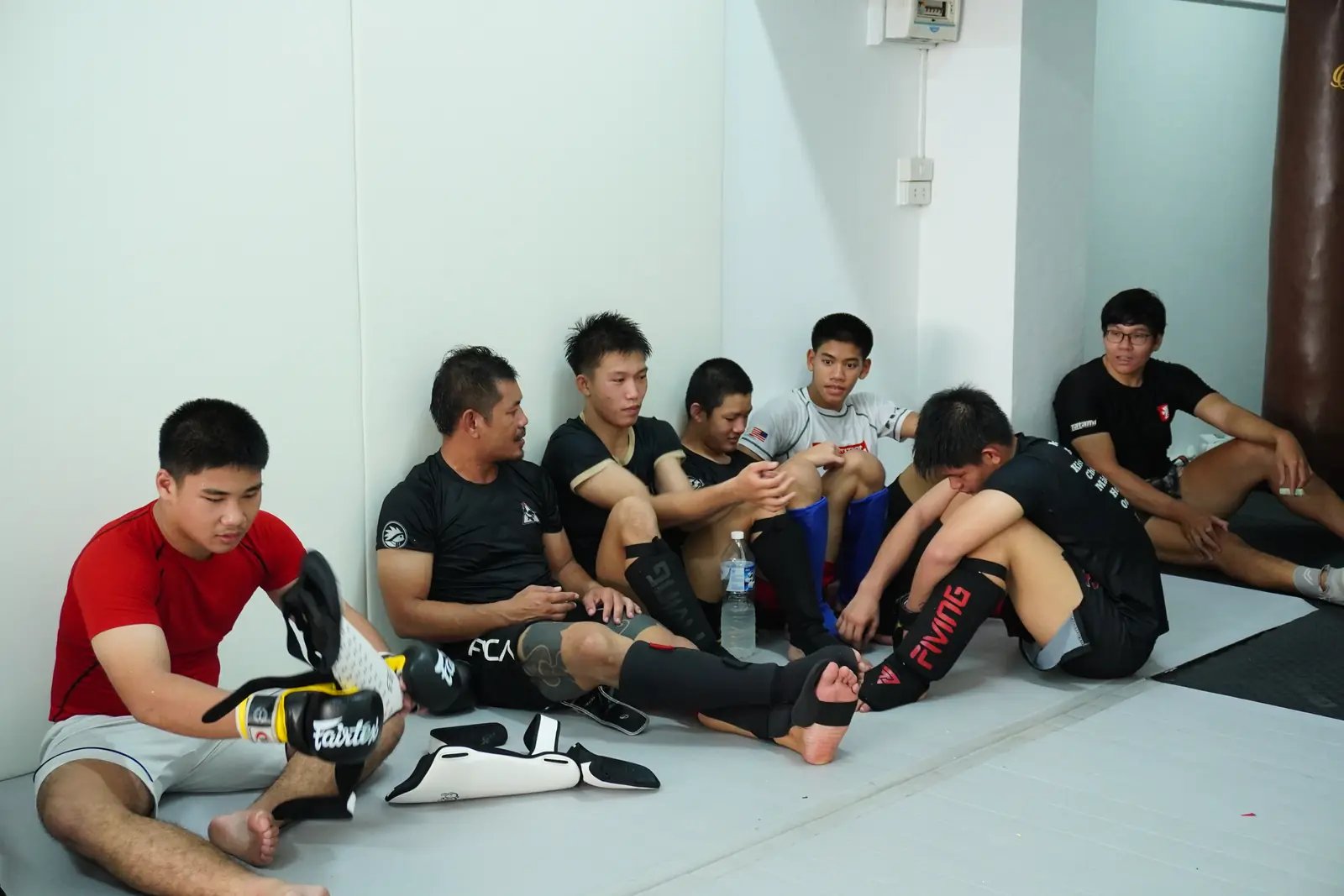
Everyone starts somewhere
Book your first classQuestions
Is MMA hard to learn?
MMA has a lot to learn because it combines striking, wrestling and ground fighting. The good news is that you don't learn it all at once. Fundamentals classes take one skill at a time, and most people feel noticeably more comfortable after their first month of regular training.
How long does it take to learn MMA?
It depends on how often you train and what you mean by "learn". Training two or three times a week, most beginners have the basic movements of each area within a few months. Getting good takes years, which is part of what keeps people coming back.
How old is too old to start MMA?
There is no fixed cut-off for recreational training. Adults start MMA in their 30s, 40s and beyond, and train at an intensity that suits their body. If you have an injury or a health condition, check with your doctor first and tell your coach before class.
What should I wear to an MMA class?
A T-shirt or rash guard and shorts without zips or pockets. Train barefoot on the mat. Take off rings, watches and earrings. Bring water and a towel. Gloves and shin guards can be rented for 50 THB each.
Do I need to be fit before I start?
No. Training is how you get fit. Take breaks when you need them, drink water, and build up over a few weeks.
Will I get hurt?
MMA is a contact sport, so bumps and bruises can happen. Beginners drill techniques at a controlled pace with a partner, not at full power, and sparring is optional until you are ready. Tell the coach about any injury before class starts.